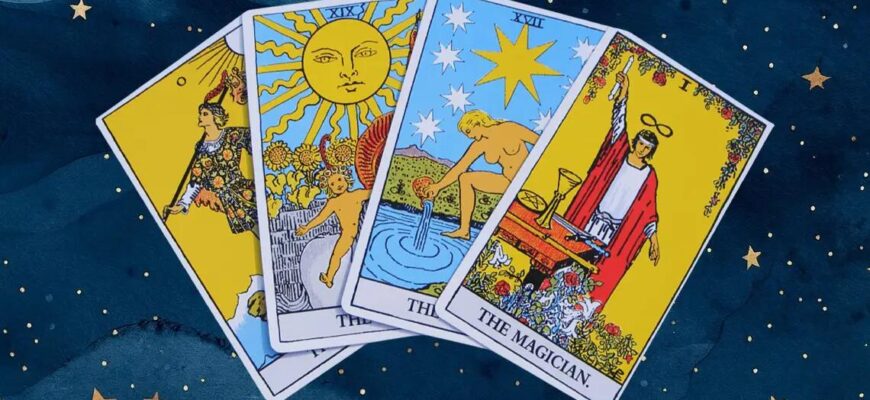
Tarot cards, an ancient divination tool, are not just a way to glimpse the future but a powerful method for exploring the inner world and fostering spiritual development. Through their deep symbols and archetypes, Tarot helps us contemplate our current situation, listen to the voice of the subconscious, and take a step toward personal transformation.
Using Tarot allows for a deeper understanding of one’s emotions, thoughts, and challenges. Each card represents a specific energy and stage of change. When the cards are revealed, they not only reflect the present but also guide our attention toward future possibilities. Regular practice and interpretation help develop intuition, leading to wiser choices and an enhanced quality of life.
In daily life, Tarot can become the starting point for a journey of self-discovery. Systematic use of the deck clarifies thoughts and allows one to track inner changes. For example, when struggling with a decision, a few cards can serve as a guide, helping to see the situation from different perspectives, uncover “blind spots,” and choose a path aligned with the inner self.
Furthermore, the very process of interpreting Tarot is a form of meditation. In a fast-paced world, take time to quietly focus on the images and meanings of the cards. This helps to slow down, clear the mind, delve deeper into oneself, and support spiritual growth. This meditative process calms emotions, increases awareness, and fosters balanced decision-making.
Beyond personal work, Tarot can be used to analyze interpersonal relationships. By observing the energy of the cards in the context of interactions with others, one can better understand their needs and emotions, leading to improved communication and the building of deeper, more harmonious connections.
Thus, Tarot cards are not merely a predictive tool but a means for spiritual growth and self-improvement. A dialogue with the Tarot allows for better self-understanding, finding higher meaning and purpose, which ultimately leads to an improved quality of life. This path of knowledge is full of possibilities, and each reading becomes an important step toward oneself.
- Basic Principles of Tarot and the Importance of Spiritual Growth
- How to Choose the Right Tarot Deck for Reading
- Post-Reading Reflection: The Key to Deepening Spiritual Growth
- Practical Tips: Using Tarot to Solve Life’s Problems
- Tarot Culture: Communities and Spaces for Sharing
- A Case Study
- Frequently Asked Questions (FAQ)
- Key Takeaways
Basic Principles of Tarot and the Importance of Spiritual Growth
Tarot cards are an ancient tool that serves not only to forecast the future but also as a bridge to spiritual growth. Through the symbols and archetypes of the cards, we can delve inward to understand deep-seated emotions and thoughts, fostering personal transformation.
The deck consists of 22 Major Arcana, reflecting significant life lessons and developmental stages, and 56 Minor Arcana, describing everyday situations. These symbols are tools that guide our thinking. In moments of doubt, Tarot helps find answers within, increasing self-awareness.
Spiritual growth is a continuous process of making sense of life. With Tarot, we can reflect on our choices and how past experiences influence current decisions. This is a path to clarifying thoughts, accepting emotions and fears, self-healing, and achieving inner harmony.
In practice, a reading is a moment of deep reflection. The spread’s results point not only to possible directions but also help us become aware of the underlying causes of situations and our own behavioral patterns, making change possible.
Working with Tarot, whether alone or with like-minded individuals, promotes spiritual growth. It is time for self-analysis and silent dialogue with the inner voice, which is crucial for improving quality of life.
Studying Tarot provides not only life guidance but also opens a path inward. It is a process of self-discovery that expands consciousness and opens new possibilities for growth.
How to Choose the Right Tarot Deck for Reading
Choosing “your” deck is an important first step on the journey into the world of Tarot. Several key factors should be considered:
-
Imagery and Design: This is the most subjective criterion. Decks vary in artistic style (classical, like Rider-Waite-Smith, or modern, like “Crystal” Tarot). Choose one whose images speak to you on a deep level—this will enhance your intuition and inspiration.
-
The Deck’s Focus: Some decks are more focused on psychological analysis and working with the subconscious, others on predictive practice. Define your goals to make a conscious choice.
-
Personal Feel: If possible, hold the deck in your hands, “feel” it. Many stores allow this. Even when buying online, carefully study card photos and reviews.
-
Follow Intuition: Choosing a deck is a deeply personal process. Don’t blindly follow trends or advice. Tarot is a bridge to self-knowledge, and the deck that inspires you will become your faithful guide.
Post-Reading Reflection: The Key to Deepening Spiritual Growth
The true value of a reading is revealed in the reflection that follows. This is a key stage for integrating the insights gained into life.
-
Contemplating the Message: Ask yourself questions: How does this relate to my situation? What are my true needs reflected here? What needs to change?
-
Integration into Life: Write down thoughts in a journal, meditate on the cards, share insights with a trusted person. This helps solidify understanding and begin applying it in practice.
-
Discussion with Others: Dialogue with like-minded people can open new layers of interpretation, challenge stereotypical thinking, and enrich your spiritual experience.
Each reading is an opportunity for deep self-analysis and a step toward personal growth.
Practical Tips: Using Tarot to Solve Life’s Problems
Tarot is a practical tool for clarifying thoughts in difficult situations.
-
Create Atmosphere: Find a quiet place, relax, concentrate on the pressing question.
-
Perform a Spread: Choose a simple spread (e.g., 1-3 cards). Analyze the symbols that appear. For example, “The Fool” may call for a new beginning, while “The High Priestess” advises trusting intuition.
-
Record Insights: Write down your thoughts and feelings. This deepens understanding and serves as a reminder for tracking dynamics.
-
Regular Practice: A daily or weekly card draw helps maintain mindfulness, track internal changes, and better cope with difficulties.
Tarot Culture: Communities and Spaces for Sharing
Tarot culture is actively developing as part of the movement toward self-knowledge. A vibrant community has formed here:
-
Spaces for Exchange: Workshops, courses, and meetings are held where both beginners and experienced tarot readers share knowledge and spiritual experiences in a relaxed atmosphere.
-
Focus on Growth: Events often focus not only on reading techniques but also on using Tarot for meditation, self-analysis, and personal transformation.
-
Accessibility: Tarot practice is integrated into daily life. Many people start the day with a card, using its wisdom as a guide for more conscious living.
This community is open to all who seek growth and provides support on the path of inner exploration.
A Case Study
-
Work Challenges: When feeling confused, drawing the “Strength” card can remind you of inner courage and resilience, motivating you to meet challenges bravely.
-
Relationship Questions: The “Lovers” card can prompt reflection on harmony and true values in a partnership or, for a single person, openness to new love.
-
Choosing a Path: Before an important decision (changing jobs, moving), the “Hermit” card may advise taking a pause for deep reflection, avoiding hasty actions.
A regular dialogue with Tarot helps not only to find answers in the moment but also develops long-term awareness.
Frequently Asked Questions (FAQ)
Q1: What is Tarot and how does it work?
A: Tarot is a system of 78 archetypal cards. During a reading, through the intuitive interpretation of these symbols, we project our subconscious, which helps clarify thoughts, emotions, and potential developments of a situation. It is a tool for reflection, not “fortune-telling.”Q2: How does a beginner choose their first deck?
A: Follow your personal feelings. Study the images of different decks (online or in a store). The classic Rider-Waite-Smith deck is a universal and recommended starting point due to its clear symbolism.Q3: How accurate are Tarot readings?
A: “Accuracy” depends on the reader’s ability for honest reflection and the clarity of the question asked. Tarot reflects current energetic trends and deep psychological patterns, not a predetermined future.Q4: How to use Tarot specifically for spiritual growth?
A: Through regular self-analysis practice. After each spread, ask yourself, “Why did this card resonate this way?”, “What does this say in the context of my life?” Keep a journal to track insights and internal dynamics.Q5: Is Tarot for everyone?
A: Tarot is a tool for those open to self-exploration. Even without a belief in esotericism, it can be used as a psychological catalyst to view a situation from a new angle.Q6: How to make working with Tarot more effective?
A: Create a ritual (silence, a candle, relaxation), formulate clear, open-ended questions, trust your first intuitive reaction to a card, and be sure to record your reflections.
Key Takeaways
-
A Tool for Growth: Tarot is primarily a system of symbols for self-discovery, meditation, and intuition development, not just a method of divination.
-
Practice and Reflection: The core value lies in contemplating the received images and integrating them into life. Regular practice and journaling deepen the process.
-
Improving Quality of Life: Through better understanding of oneself, one’s emotions, and motivations, Tarot helps make more conscious decisions, improve relationships, and find inner harmony.
-
Community and Support: Learning and exchanging experiences within a circle of like-minded people (offline or online) significantly enriches the journey, providing support and new perspectives.
-
A Path to Oneself: Ultimately, working with Tarot is a path of spiritual elevation that leads to greater meaningfulness, inner peace, and the ability to see opportunities for growth in any circumstance.